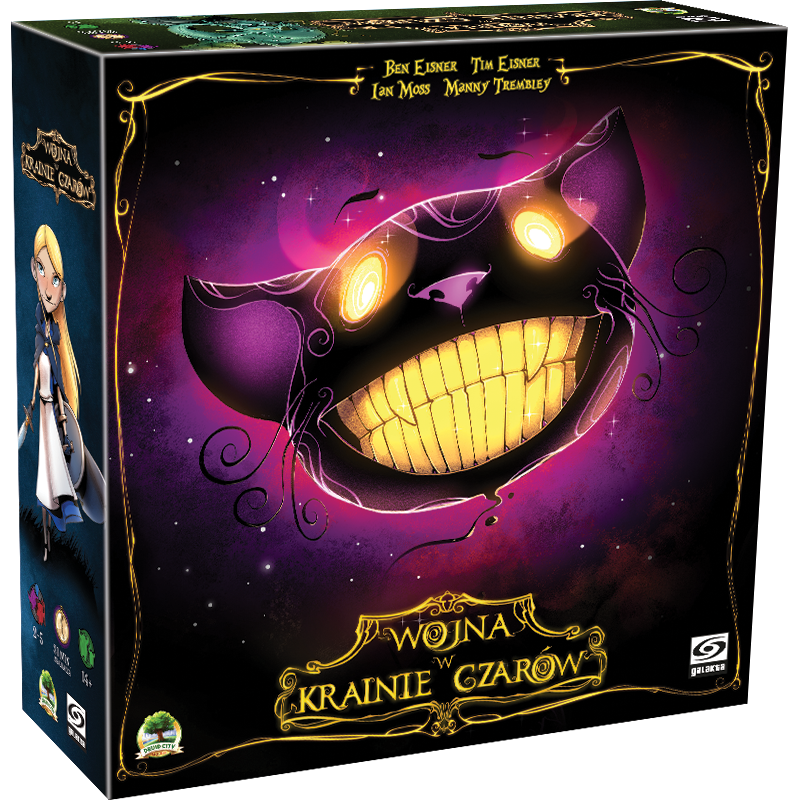
♠️ War in Wonderland — tea parties, intrigue, and open conflict
⭐ 20/10
Players: 2–4 (best with 3–4)
Play time: ~45–75 minutes per player
Difficulty: Medium / Medium-heavy
Game type: Strategic / Conflict / Area control
Mechanics: card management, alliances, influence battles, combo building
🎯 What is this game about?
War in Wonderland is a strategic conflict game set in the world of Alice in Wonderland — but forget the cute fairy tale.
This is Wonderland after the rules have fallen apart: full of rival factions, shifting alliances, ambition, and open power struggles.
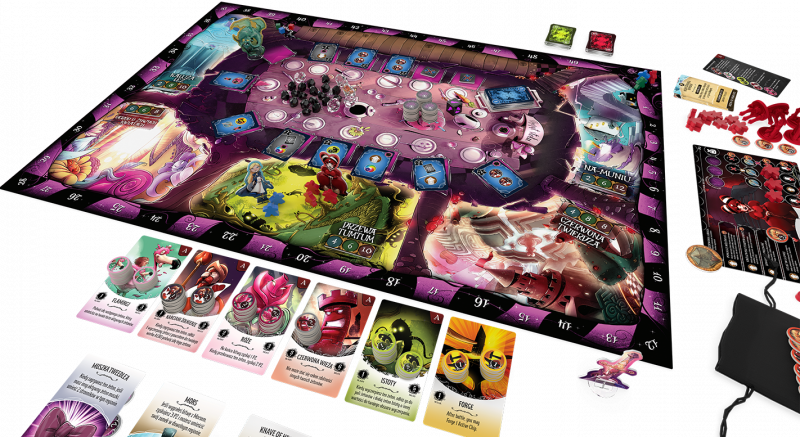
Each player leads their own side of the conflict, fighting for control over regions, building influence through cards, Allies, and Residents, and choosing the right moment to strike. Planning matters just as much as timing here — and one well-played round can completely change the balance of power on the board.
☕ Tea Party Phase & ⚔️ War Phase — how the game flows
The heart of the game beats in two distinct rhythms:
☕ Tea Party Phase
This is the planning and combo phase. During Tea Party, you:
play Character cards and other cards
recruit Allies and Residents
collect tokens and Shards
set up your strategy for the coming conflicts
It feels calm on the surface, but this is where the most important decisions are made. A weak setup or overly cautious play will come back to haunt you in the War phase.
⚔️ War Phase
Everything you prepared finally comes into play.Conflicts erupt, influence is counted, abilities trigger, and card effects chain together. Allies and Residents reveal their true power, while Shards often decide who gains the upper hand in key moments.
This phase is more direct — but still deeply strategic. Victory doesn’t belong to the player who attacks the most, but to the one who planned their Tea Party best.
🤝 Allies, Residents & Shards — what really makes the difference?
Allies are powerful cards with unique abilities. They bend the rules, strengthen actions, and allow for surprise plays at exactly the right moment.
Residents help you establish and maintain influence in specific regions of Wonderland. They are essential for area control.
Shards are a quiet but crucial currency. They unlock stronger effects and often decide the outcome of War phases.
The game constantly forces meaningful choices:
Do you invest in immediate power or long-term control?
Spend Shards now or save them for later?
Block an opponent — or strengthen your own position?
🌿 Why does this game work so well?
🃏 Huge number of combinations — cards, Allies, and Shards ensure that every game feels different.
⚖️ Great tension between planning and conflict — Tea Party and War complement each other perfectly.
♟️ Strategy over randomness — your decisions truly matter.
🎨 Strong visual style — darker, more mature, and far from a classic “cute” Wonderland.
👥 Shines with 3–4 players — that’s where interaction and tension peak.
💀 Things worth knowing before you buy
📦 The box is huge — it takes up serious shelf space.
🧍 Paper standees — functional, but with this production quality they beg for something sturdier.
🧠 Not a light game — you need to enjoy planning, conflict, and thinking several moves ahead.
✨🧀🍞 Cheesy Joke Corner 😄
In War in Wonderland, it’s like meeting your mother-in-law:
first the Tea Phase… and then the War Phase ☕⚔️
☕ My impressions
I love this game. It’s strategic, dense with decisions, and incredibly satisfying when a Tea Party plan clicks perfectly during the War phase. The atmosphere and sheer number of possible combinations really stand out — you can feel this game was designed for players who enjoy having real control over the flow of the match. This is not a quick, casual filler.
It rewards focus, engagement, and smart play — and that’s exactly why I rate it so highly.
One small note at the end:
I’m not entirely sure yet how War in Wonderland plays at two players. I strongly feel that the full depth of intrigue, alliances, and tension shines best with 3–4.
But! A two-player game is still ahead of me — and I’m genuinely curious how this world behaves in a more intimate duel 😉
🎯 Final score: 20/10
Stylish. Strategic. Deeply engaging.
Best for 3–4 players who enjoy conflict, planning, and a much less polite version of Wonderland. ♠️☕⚔️
