⭐ Ocena: 30/10
Players: 1–5
Play time: approx. 30 minutes
Difficulty: Light / Medium
Game type: Abstract / Family / Relaxing
Mechanics: card drafting, layering, set collection, planning, solo mode
🎯 What is this game about?
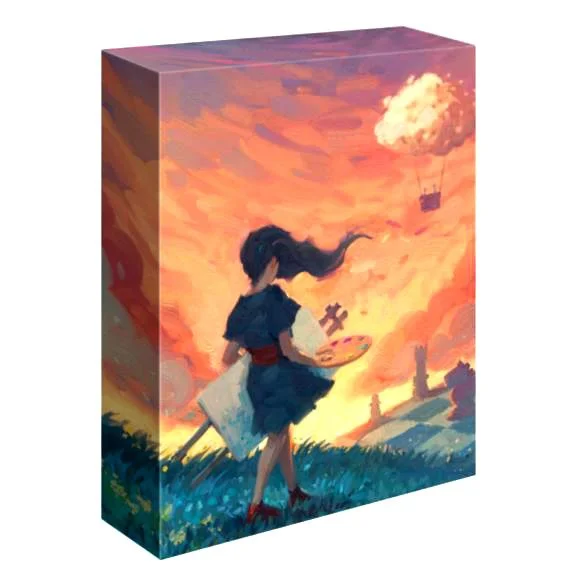
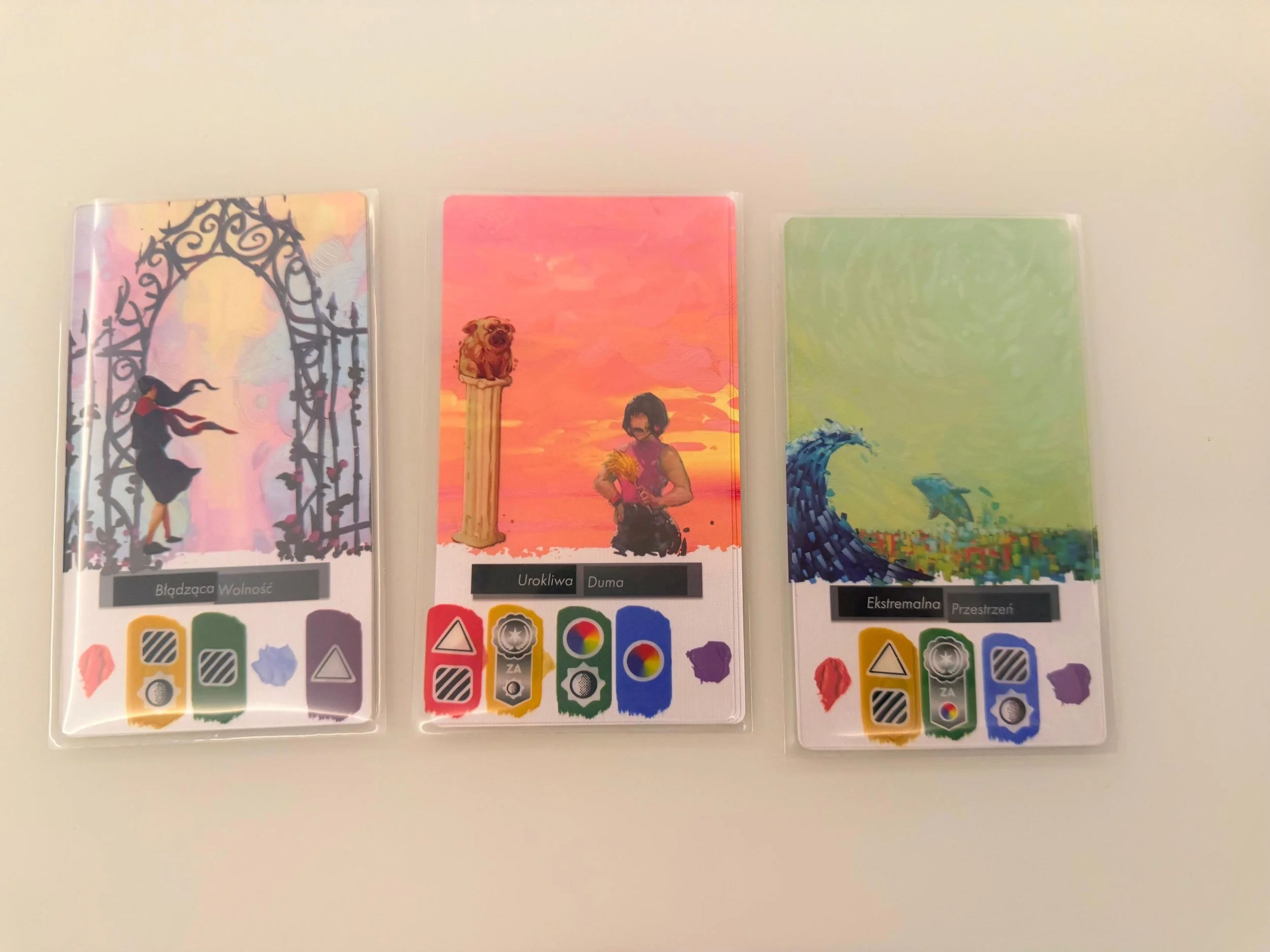
Canvas is a game about creating paintings. Literally. Each player takes on the role of an artist participating in an art festival and, over the course of the game, creates three artworks — each composed of three transparent cards slid into a special sleeve, layer by layer.
What ultimately remains visible on the painting — the colors, symbols, and their arrangement — scores points. What gets covered by another layer — disappears and scores nothing at all. Canvas is a calm, aesthetic game built around very deliberate decisions. It feels much more like designing and composing than classic board-game competition.
🃏 What does a turn look like?
On your turn, you perform one of two actions:
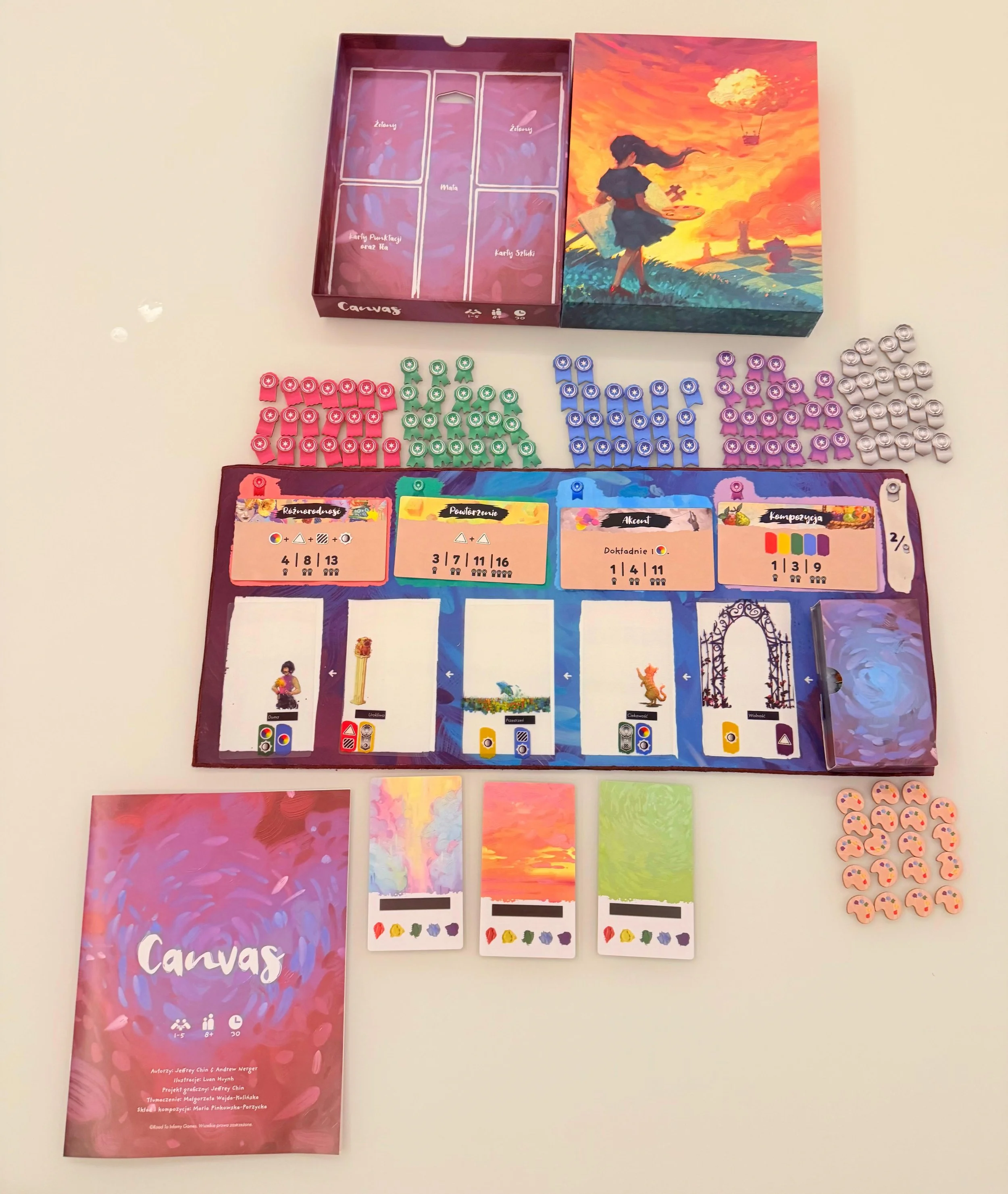
take an Art Card from the row of available cards
complete a painting, if you already have enough cards
Card drafting is one of the most elegant parts of the game. Cards are laid out in a line — the farther from the deck, the easier they are to take. If you want a card closer to the deck (often the more attractive ones), you must pay Inspiration Tokens, placing them on the skipped cards. The next player who takes that card also collects the tokens.
When you complete a painting, you choose exactly three cards and decide their order. This is a crucial moment — layering matters a lot. You then score the painting according to the current scoring cards, take any ribbon bonuses, and move on to your next artwork.
There is no rush here and no punishment for a “wrong” decision — just a lot of satisfaction from a well-thought-out composition.
🧩 Why do I like this game?
Canvas offers a huge sense of satisfaction from creating something of your own. You can constantly see the result of your choices — the colors, symbols, and layout truly work together visually.
It plays beautifully solo — without pressure, without competition, and without the feeling that you need to act quickly. It also works very well with 2–3 players during a calm meeting or a quiet evening with tea.
💀 Why isn’t it perfect?
Canvas is a very calm and self-contained game. There’s no race, no conflict, and no moments where one player’s decisions directly ruin another’s plans.
It’s also worth noting that if you play with someone who focuses purely on point maximization, the atmosphere can change. Canvas shines most when treated as a creative process rather than a mathematical puzzle to squeeze out every last point.It’s not a game for everyone — but it’s perfect for those who are looking for peace.
🏆 How do you win?
The game ends when all players have completed three paintings. The player with the most points wins.
Points are awarded for:
fulfilling scoring card conditions
correct symbols and their arrangement
ribbon bonuses
thoughtful planning of card layers
Canvas rewards consistency and long-term thinking, not one flashy move.
☕ My impressions
Canvas is, for me, the definition of a relaxing game. Perfect for solo play, perfect for a quiet evening, and perfect when you don’t have the energy for rules explanations or competition.
It’s one of those games where you can let your imagination take over, disconnect from time and place, and get completely absorbed in creating art — sometimes for hours.
✨🧀🍞 Cheesy Corner
Canvas is the perfect game where painting doesn’t take hours — and your room (and clothes) don’t end up covered in paint.
Most importantly, even someone as untalented as me can create a work of art 🎨😌
🎯 Final Score: 30/10
Canvas does exactly what I expect from it: it calms me down, gives me satisfaction, and lets me create instead of destroy. Quiet. Aesthetic. Very pleasant. Perfect for peaceful evenings 🤍
RULEBOOK: CANVAS
