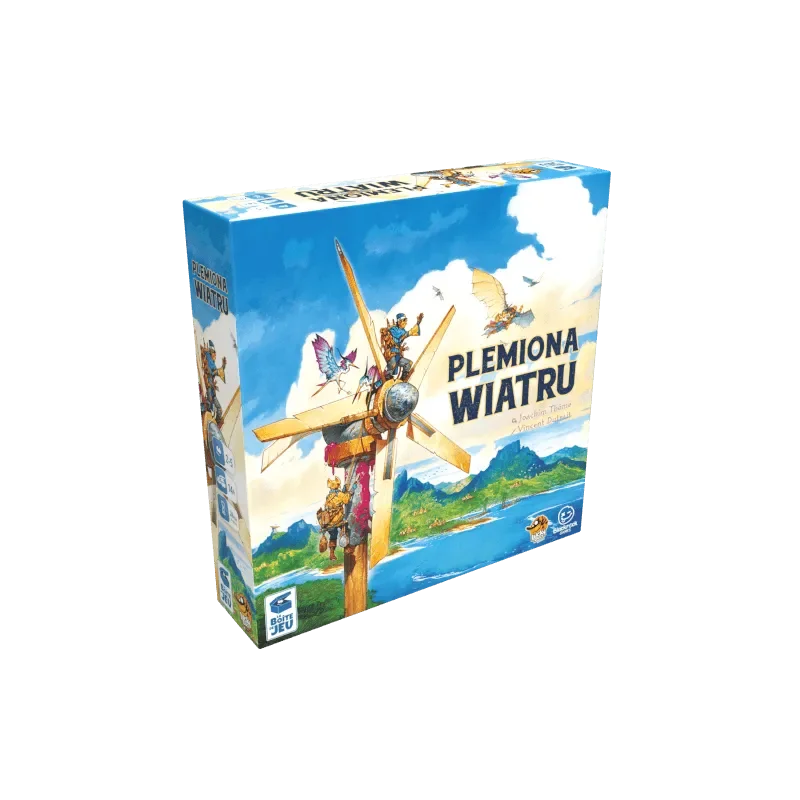
3/10
Players: 2–5 (best at 3)
Play time: ~60–90 min
Difficulty: Medium-Heavy
Mechanics: Hand management, Card drafting, Tile placement, Engine building, Area control
🎯 Goal of the Game
In a post-apocalyptic world, wind-riding tribes work to restore nature by building villages on polluted lands. You place element cards, build villages on forest tiles, send wind riders across the board, and unlock guide powers — all to score the most points.
The game ends when someone builds their 5th village. Then you finish the round plus one extra, tally up points from villages, temples, guides, and remaining pollution tokens (which cost you points).
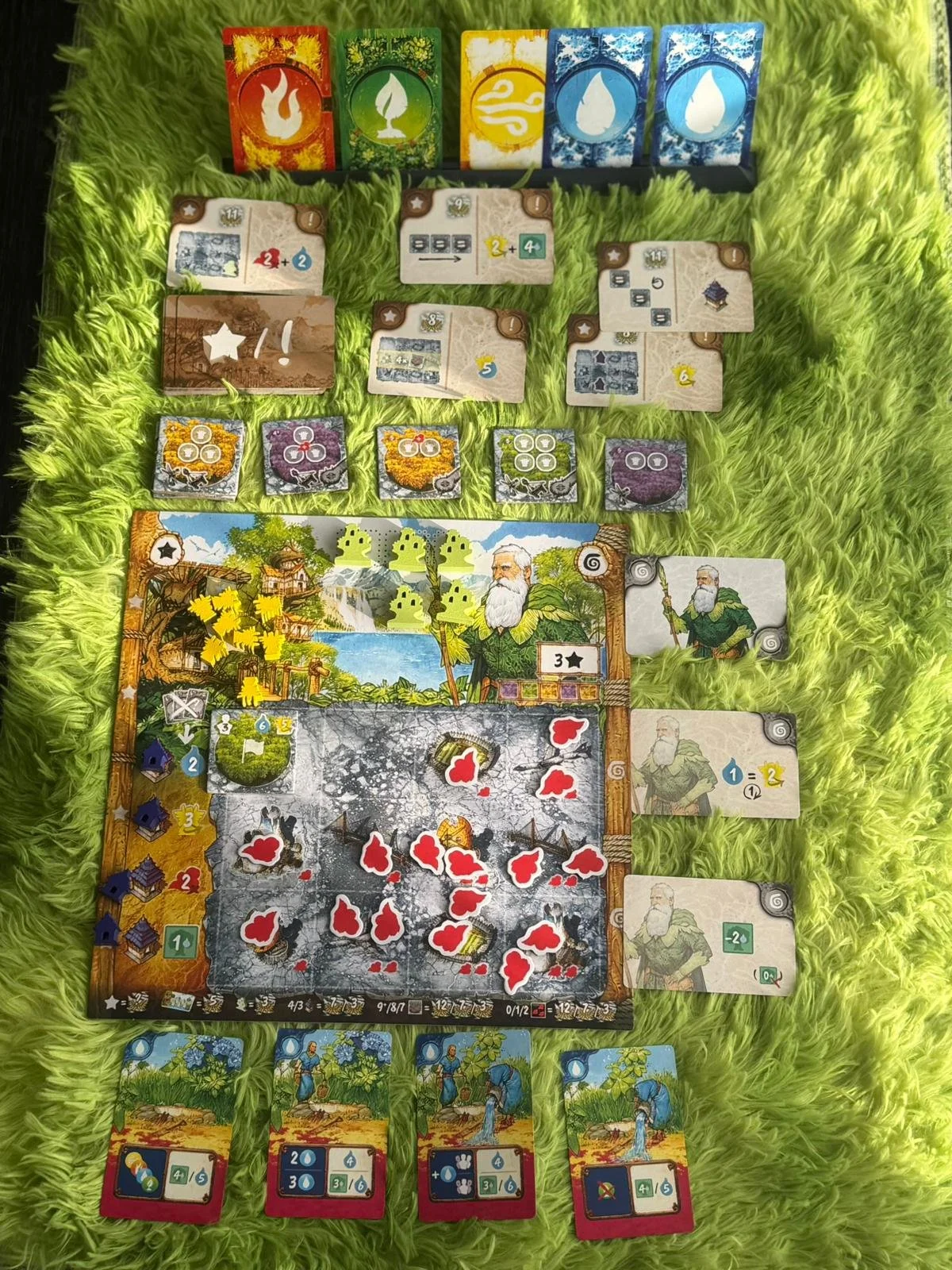
🃏 How a Turn Works
On your turn, you do ONE action, then refill your hand to 5 element cards.
🔄 Actions (pick one)
Play an element card — Place it face-up in front of you. You must meet the card’s REQUIREMENT (shown on the back: number of specific elements you or your neighbors hold). Then resolve the card’s EFFECT: move wind riders, remove pollution, gain water, flip forest tiles, etc.
Build a village — Discard 1 element card matching the forest tile’s element. The tile must have a wind rider on it and no pollution around it. Flip the tile to its village side, place a village token, and gain building bonuses (wind gates, catapults, turbines, or water).
Place a temple — Discard 3 element cards (no requirements, no effects). Place a temple token on an empty forest tile connected to a village. Temples score points based on surrounding villages at game end.
⚔️ Key Mechanisms
Element cards have 4 types (fire, water, earth, wind). Requirements check what’s visible on card BACKS in your hand and your neighbors’ hands. This means other players can see what elements you hold.
Wind riders move across forest tiles. They’re needed to build villages and can be catapulted to distant tiles.
Pollution tokens block building. You must remove all pollution around a tile before building a village there.
Guide cards unlock permanent powers when you meet their conditions. 4 guides per player, each with different abilities.
🏁 End of Game & Scoring
5th village built → finish round + 1 extra round
Points from: village cards, temple positioning, guide bonuses, remaining water tokens
Minus points for: remaining pollution tokens on your board
Highest score wins
🏆 How to Win (Real Tips)
Keep a cheat sheet handy. Seriously. The card symbols are NOT intuitive, and you’ll be checking what each icon means for the first 3+ games.
Watch your neighbors’ card backs — their elements affect YOUR card requirements.
Clear pollution early. It’s tempting to focus on cool combos, but pollution tokens are negative points AND block village building.
Unlock guides ASAP. Their permanent powers snowball hard in the late game.
🌿 Why This Game Is Special
Let’s start with the obvious: this game is GORGEOUS. The art by Vincent Dutrait is breathtaking — a post-apocalyptic world of wind riders, ancient forests, and reclaimed lands. Every card, every tile, every component is a piece of art. If you buy this game for the visuals alone, you won’t regret it.
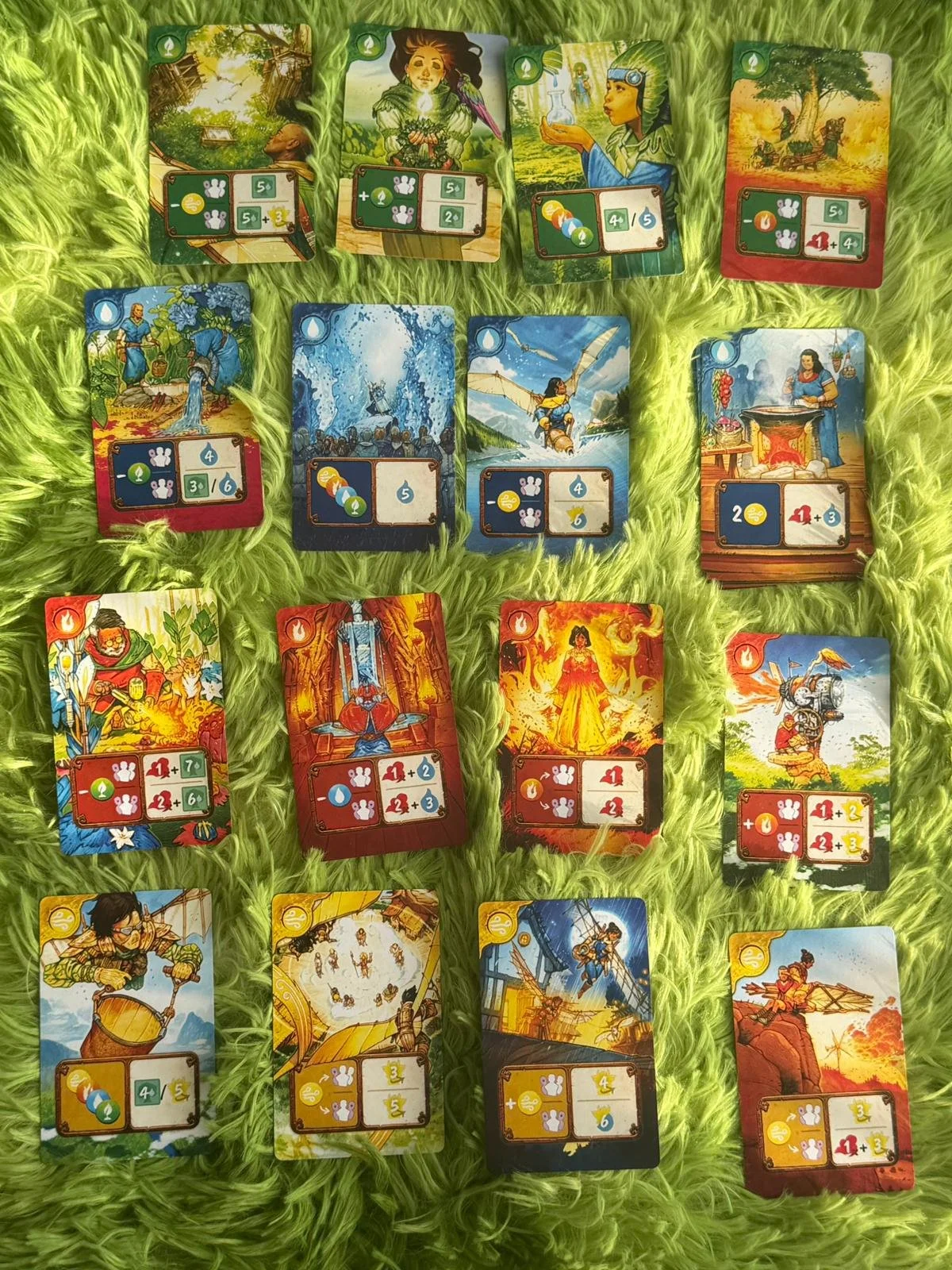
The concept is beautiful too: rebuilding nature after humanity’s mess, riding the wind to plant villages and clear pollution. It’s hopeful, ecological, and unique in the board game space.
💀 Why It’s Not Perfect
Here’s where it falls apart for me.
The rulebook is a MESS. Inconsistencies, unclear explanations, and symbols that require constant cross-referencing. As someone still building my board game experience, I had to keep a cheat sheet next to me the ENTIRE game. Every. Single. Turn. “What does this icon mean again?” “Wait, is this a requirement or an effect?”
The card system — where requirements check card BACKS (visible to others but not fully to you) — is clever in theory but exhausting in practice. You’re constantly counting symbols on everyone’s hands, checking requirements, cross-referencing effects. It feels like homework, not a game.
The mechanisms are over-engineered. Element cards, wind riders, pollution, water, forest tiles, village bonuses, temple placement, guide powers — each one is fine individually, but stacked together they create a cognitive overload that never lets you relax and enjoy the experience.
I wanted to love this game. The art pulled me in. The theme excited me. But the execution pushed me away.
☕ My Impressions
Tribes of the Wind is the most beautiful game I’ve played that I didn’t enjoy playing. And that makes me genuinely sad.
I’m a junior gamer — I’ll own that. Maybe veterans who breathe engine builders find this intuitive. But for me, every turn was an uphill battle: checking the cheat sheet, recounting card backs, trying to remember which symbols do what. The game never clicked. It never flowed. It was an exercise in frustration wrapped in stunning artwork.
At 3 players it was the most bearable — enough interaction without too much chaos. But “most bearable” isn’t exactly a ringing endorsement.
If you’re an experienced gamer who loves complex engine builders, you might find the depth I couldn’t reach. But if you’re like me — someone who wants to be immersed, not overwhelmed — this isn’t it.
🎯 Final Rating: 3/10
Breathtaking art. Beautiful concept. But an over-complicated, poorly explained ruleset that turned what should have been a magical experience into a frustrating cheat-sheet marathon. All style, not enough accessible substance.
