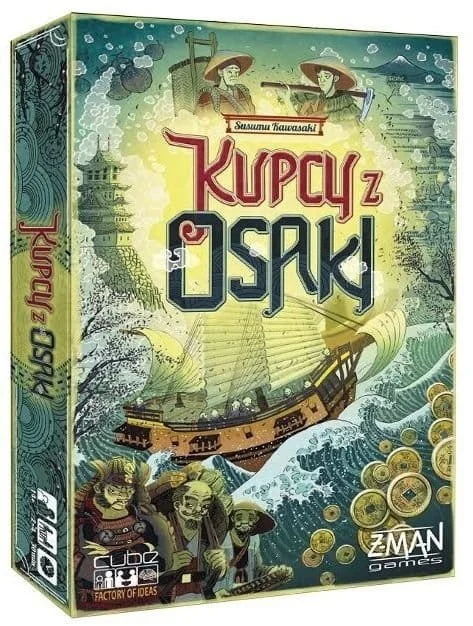
⭐ 2/10
⭐ 2/10
Players: 2–4
Playtime: 40–60 min
Difficulty: Light / Medium
Type: Economic / Trading / Set Collection
Mechanics: hand management, set collection, risk management, market economy, tempo control, push-your-luck, card reservation, asset insurance
🎯 What is this game about?
Merchants of Osaka is one of those games that looks absolutely stunning at first glance — gorgeous illustrations, Japanese atmosphere, ships gliding along the route from Osaka to Edo, elegant cards, polished tokens. I was enchanted before I even opened the box. And then I started playing.
Suddenly I felt like… an Edo-period accountant working for the Higaki Kaisen shipping line. The kind of accountant who sits over endless tables, sets, multipliers, and silently dreams of taking a lunch break.
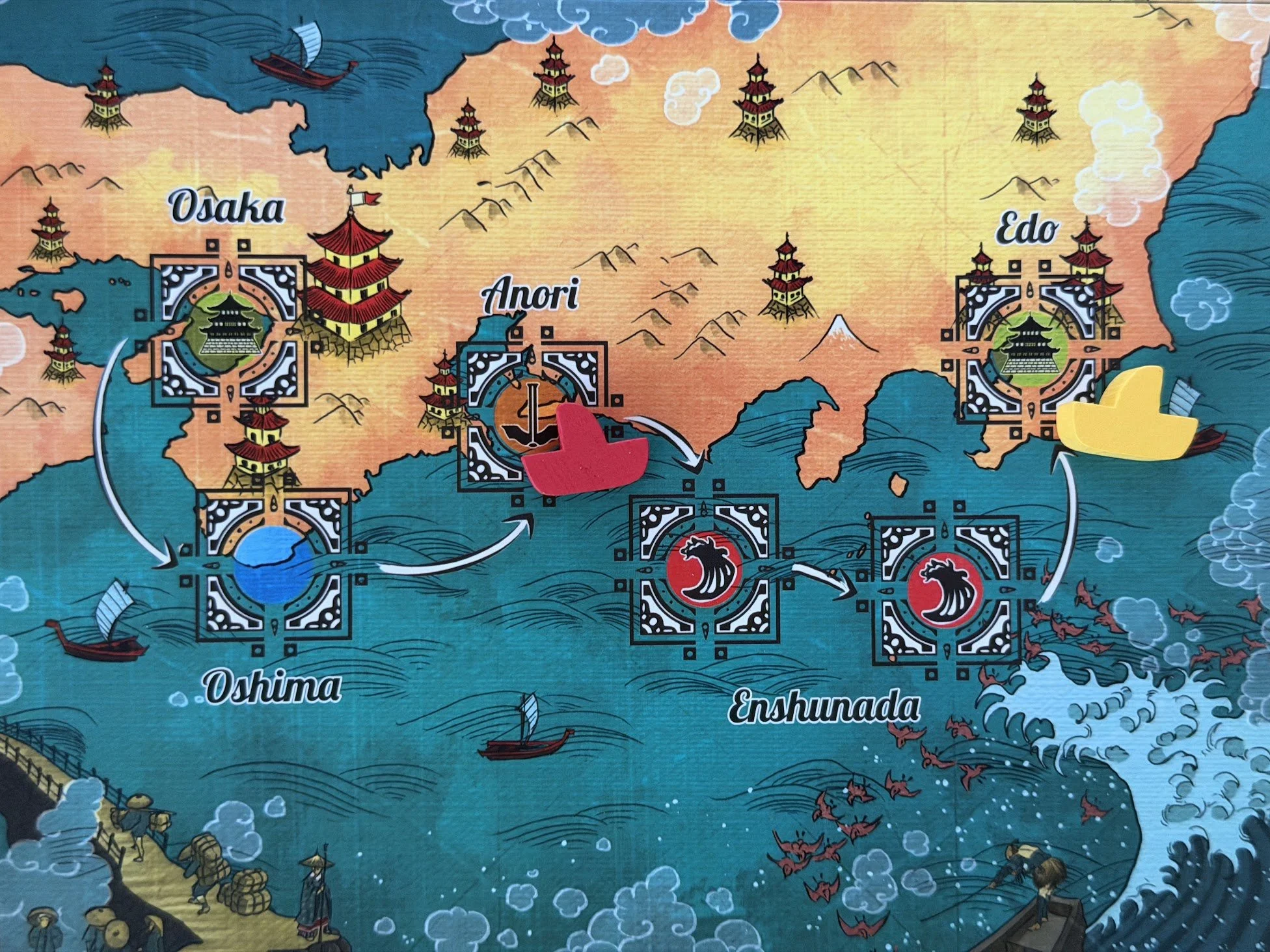
A fun fact: Higaki Kaisen were real merchant ships operating during the Edo period on a fixed line between Osaka and Edo. They sailed regularly — almost like today’s courier service — carrying rice, sake, textiles, letters, and parcels. Their sails bore the distinctive “菱” (hishi, diamond) symbol. They were so reliable that people in Edo used their punctuality as a “market indicator”: if the ships arrived on time, prices were likely to stay stable.
🃏 How a turn works
In Merchants of Osaka, you essentially do one thing the entire game:
manipulate the card market and move ships so you can sell your goods at the right moment.Every turn you choose one of three actions:
1️⃣ Buy goods
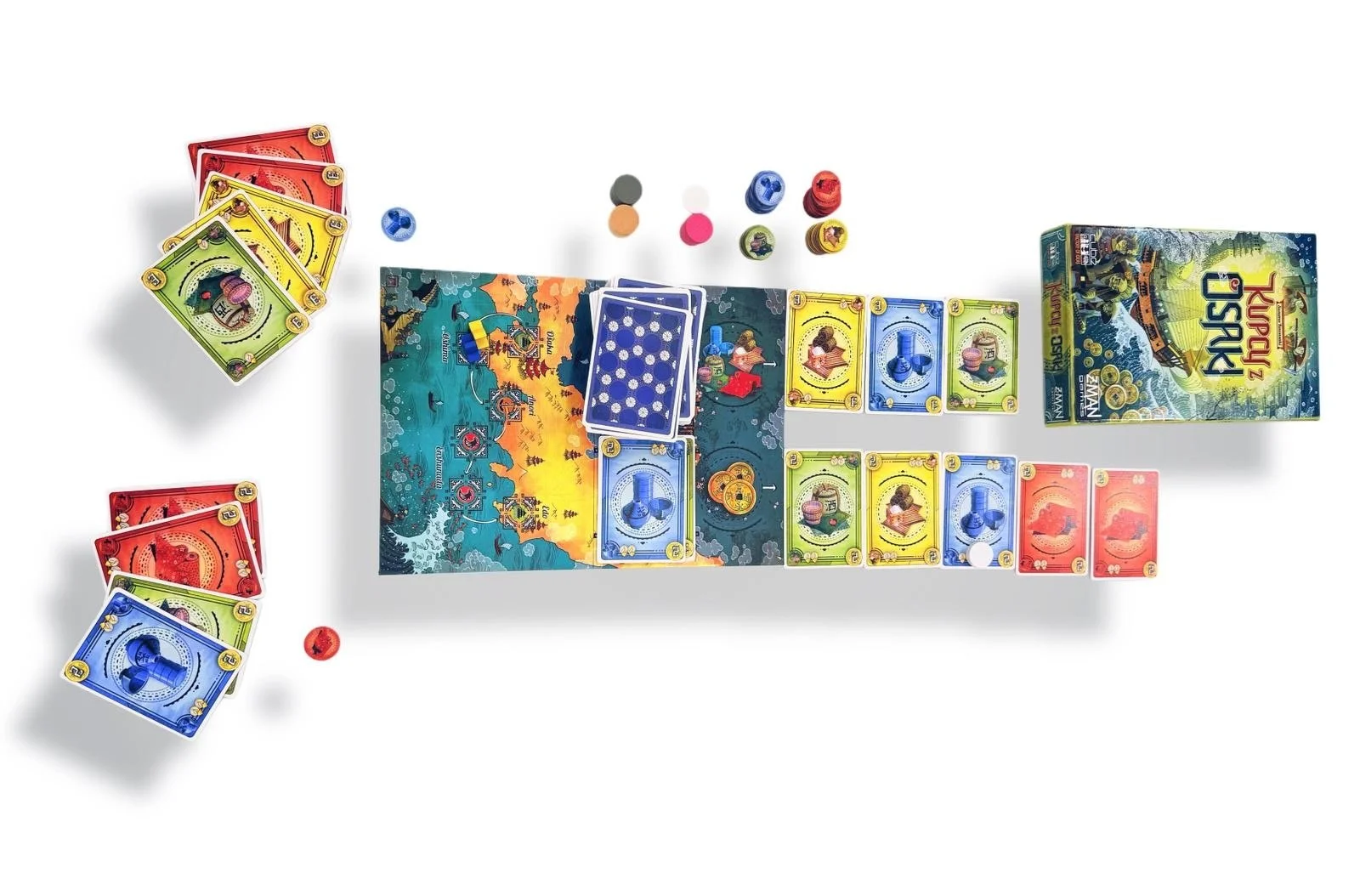
You pay using cards from your hand (your currency) and take the goods in front of you. When you do, the ship of that color moves one or two spaces toward Edo. This matters, because you — willingly or not — control when everyone gets paid.
2️⃣ Take a card as money
The simplest move: take a card from the market just to have something to pay with later. A small, tidy Japanese „household budget”.
3️⃣ Reserve a card
You place your marker on it and quietly say: “Mine. Hands off.” A very polite merchant version of “called it.”
🚢 When a ship reaches Edo
This is the big moment — the game’s payday. Everyone sells goods of that ship’s color. You calculate: highest value × number of cards.Round the result and gain victory points. It’s theoretically a moment of triumph. Theoretically.
🌊 And what if the ship stops in Enshunada?
If, at payout, the ship happens to be on that specific space — it gets hit by the Black Tide.
All your goods of that color sink. The only rescue? Insurance.
🛡️ How does insurance work?
To insure a good:
discard a card with an insurance icon,
each pip on that card saves one good of its color,
turn the insured good sideways — it’s protected from the waves.
If your ship later sinks, you still sell those insured goods. Very thematic, very necessary… and yet another layer of math.
✨ The good stuff
The illustrations are gorgeous.
The aesthetic is delightful.
The idea of moving ships to trigger payouts is clever.
And if someone loves clean, mathematical, logic-driven games — this will absolutely scratch that itch.
💀 Why this game is not for me
Constant, relentless, merciless counting. Counting sets. Counting profitability.
Counting “now or in two turns”. Counting if someone blocks you. Counting everything again because something doesn’t add up.
And emotions?
Like at a year-end financial audit.
✨🧀🍞 Cheesy Joke Time 😄
If you’re considering a career in accounting — or your current job feels pointless and you’re tempted to try something new — this game is the perfect test before you send in your CV.
Merchants of Osaka gives you everything you need: counting goods, counting profits, assessing risk, insuring assets, and that unforgettable thrill when your entire shipment sinks and you’re left with absolutely nothing. ;)
☕ Impressions
I genuinely appreciate the beautiful production and the concept. I really do. But the gameplay felt like sitting over Excel spreadsheets — just with a kimono on. No emotion, no adventure, no engagement.
By the end, I was tired and completely detached.
🎯 Final Score: 2/10
Points for aesthetics and the Japanese vibe. Minuses for everything else.
Recommended only for people who love counting and don’t need interaction, dynamism, or even a drop of adventure in their games.
