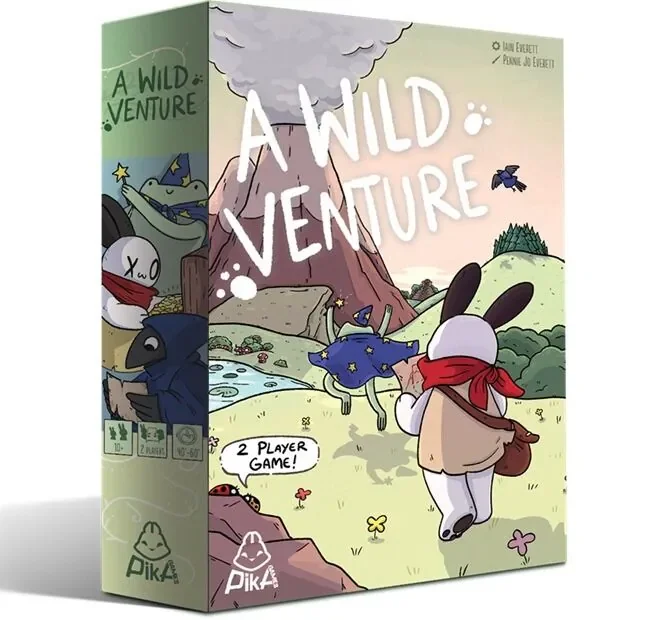
⭐3/10
Players: 1–2
Playtime: approx. 40–60 min
Difficulty: Light / Medium Type: Engine-building / Card game
Mechanics: tableau building, engine building, hand management, board movement
🎯 What’s it all about? Every year, the prestigious Community Cup is awarded to the youngster who serves the village best. This year, the competition is particularly fierce — only you and your rival remain in the running! We play as travelers journeying through a charming village inhabited by crows, frogs, and rabbits. We recruit villagers, build gear, and invest in buildings — all to stash as many cards as possible into our scoring pile. The game offers two thematic decks (Academy and Tidings), a double-sided travel board, and three species with unique cards. On paper — a journey into the unknown. On the table... well.
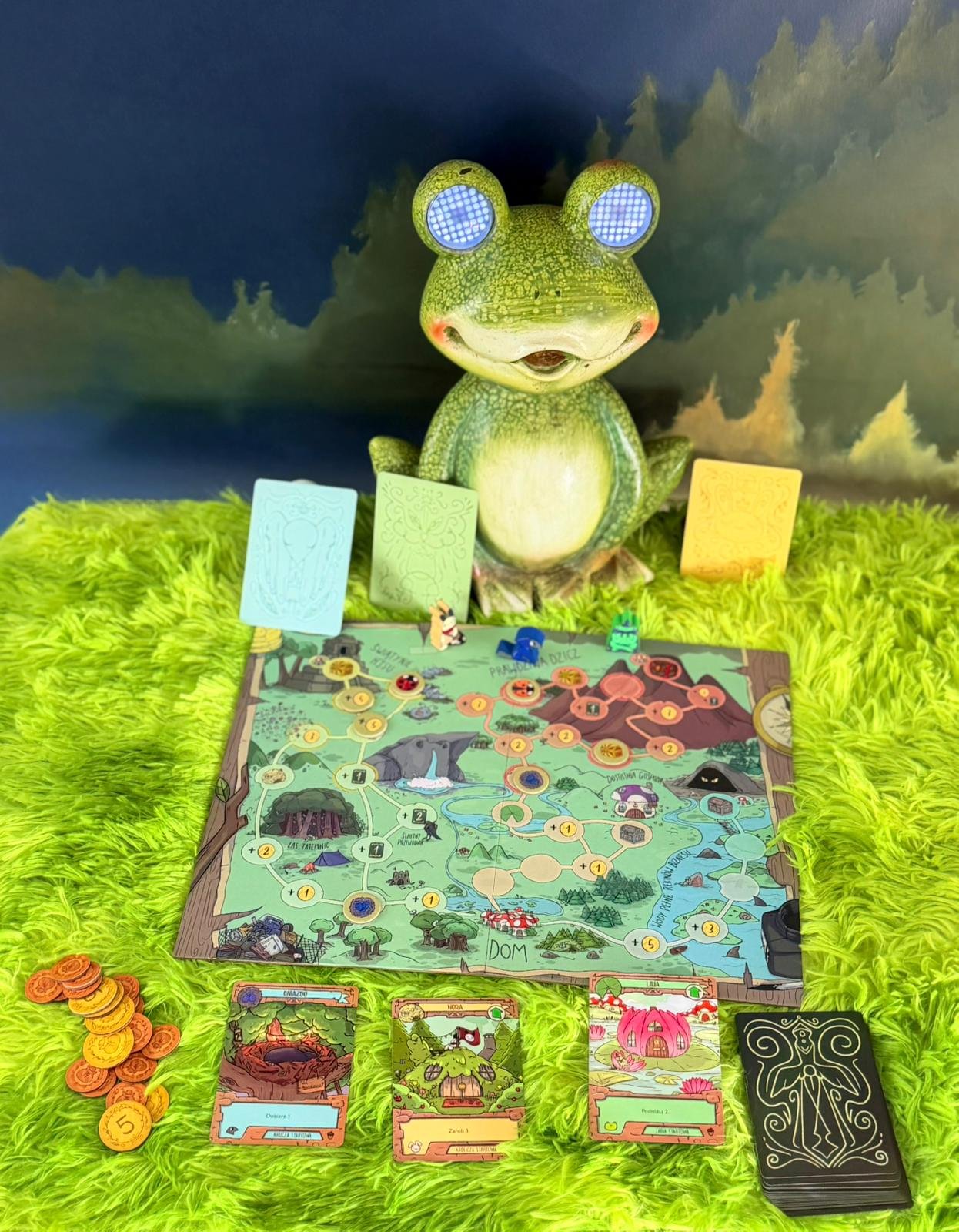
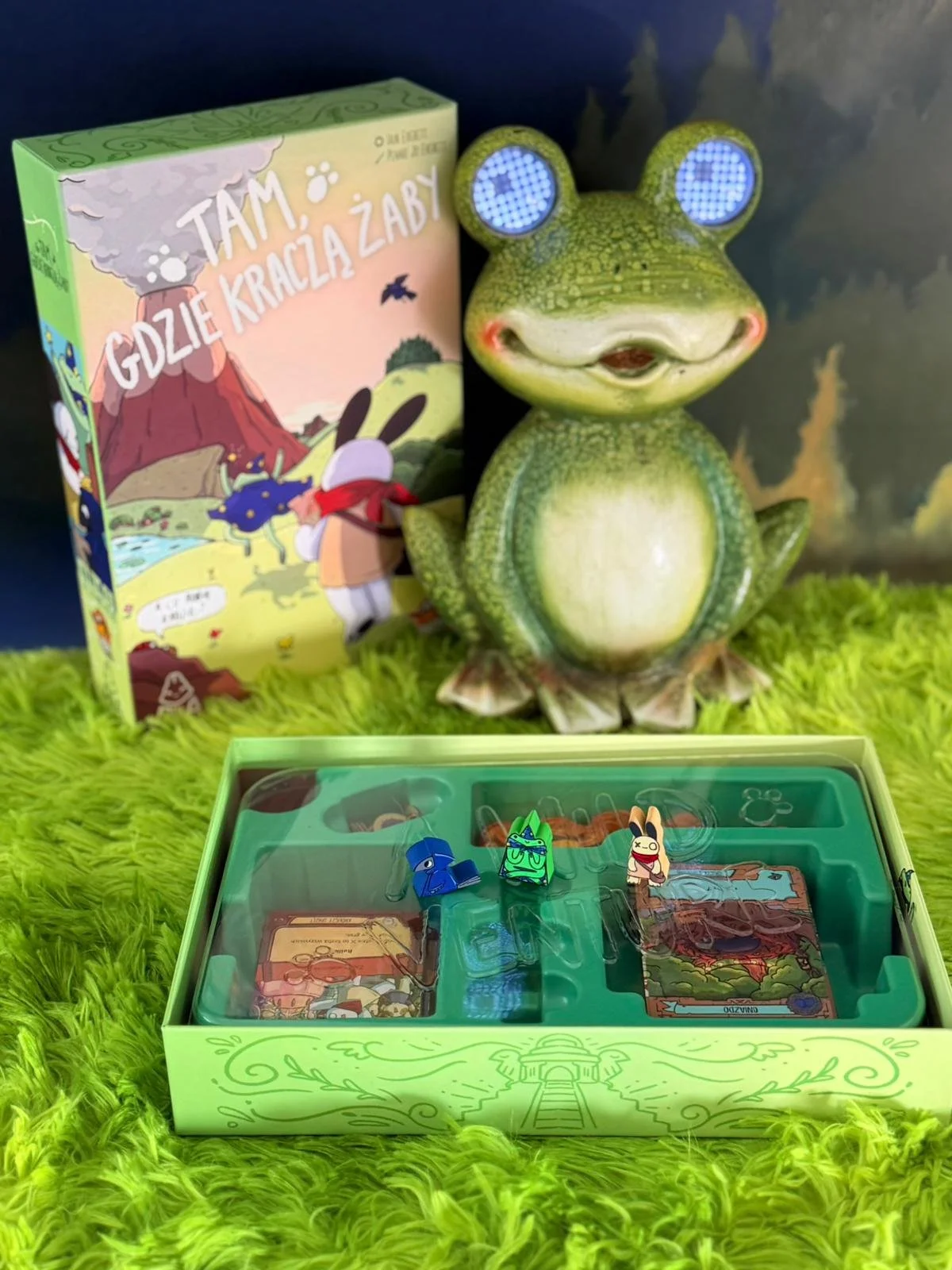
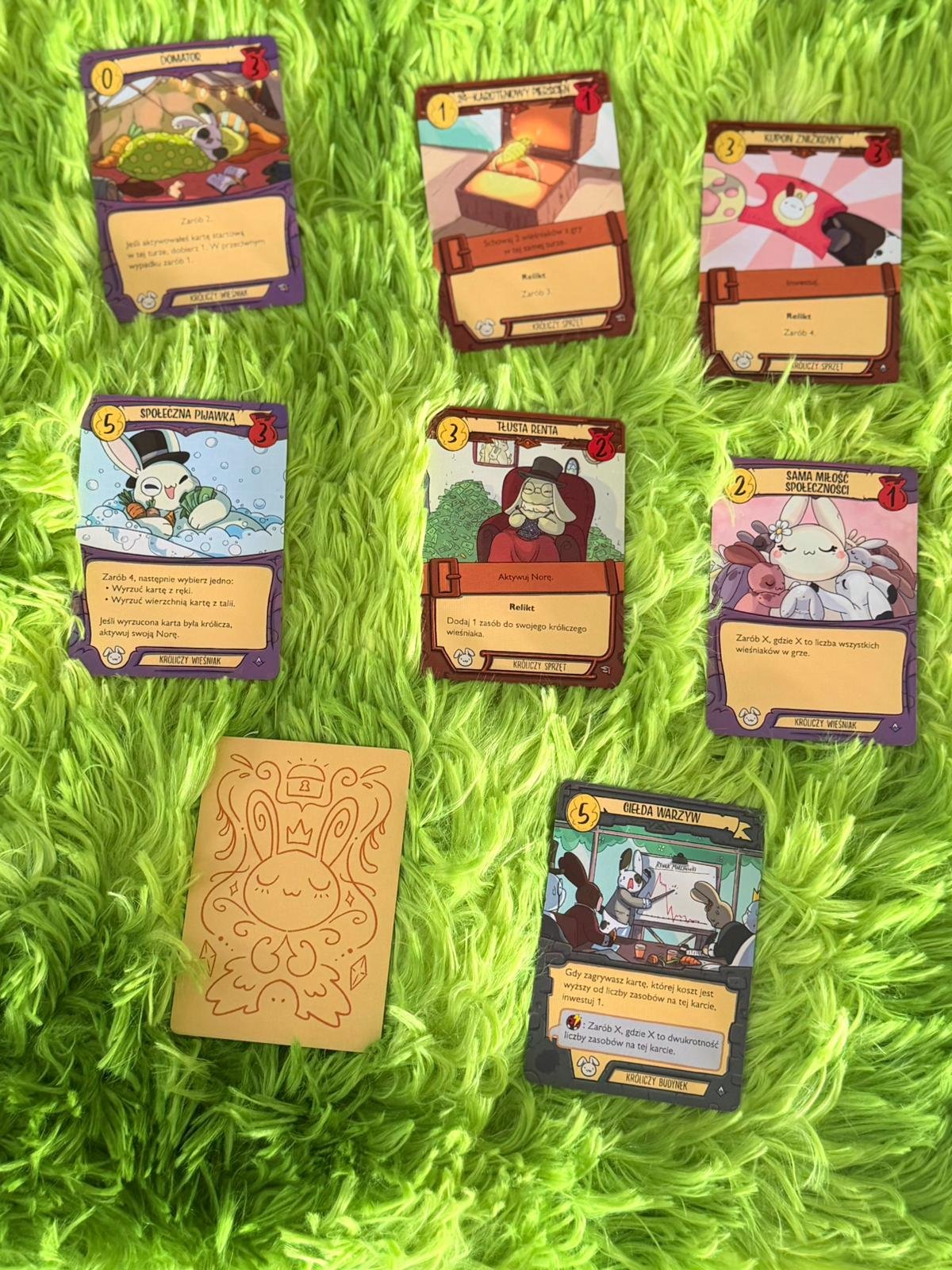
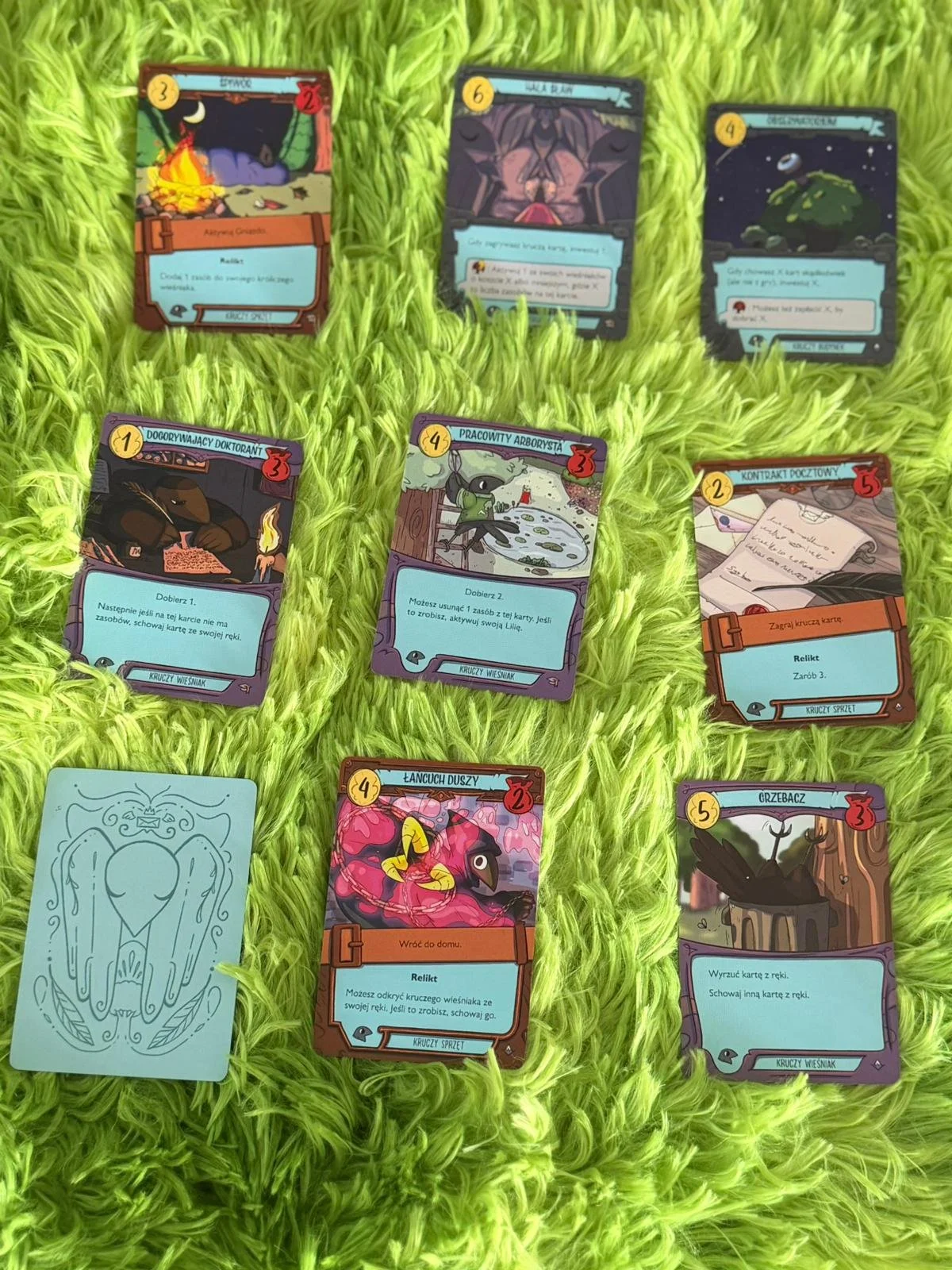
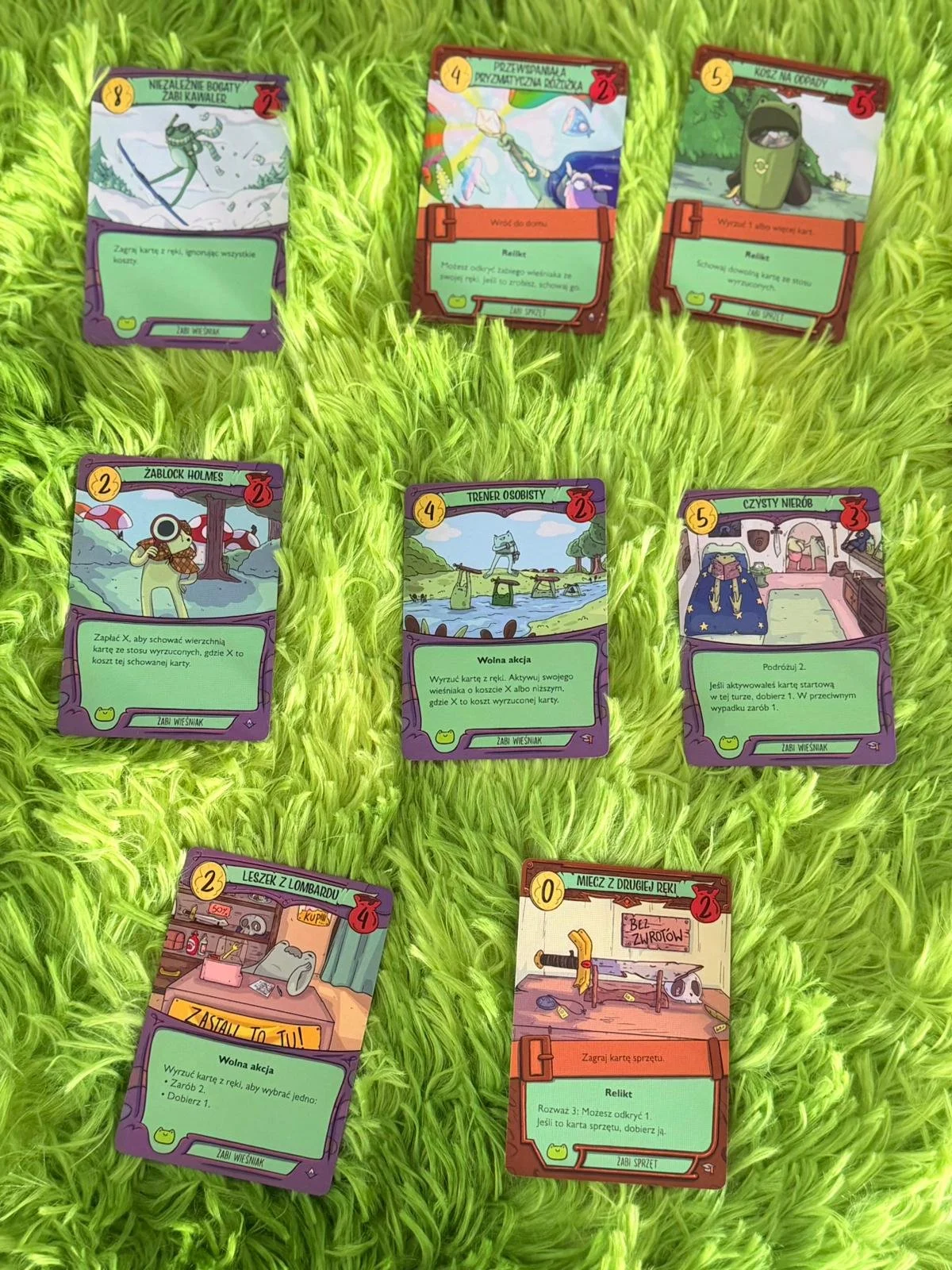
🃏 How does a turn look? The game is a 2-player card game focused on tableau management, engine building, and scoring stashed cards. You have three rows on the table: the bottom for starting cards and buildings, the middle for villagers, and the top for gear. There's also a travel board (Spring or Autumn) where you move your traveler (crow, frog, or rabbit) to collect rewards from spaces — coins, cards, or chests with special bonuses. On your turn, you must perform two main actions (plus any number of free actions). You can choose from:
Play a card — pay the cost in coins and place the card in the appropriate row of your tableau (buildings at the bottom, villagers in the middle, gear at the top).
Activate a card — choose a starting card or a villager with resources and resolve its effect. When activating a villager, you remove one resource. When resources run out, the card goes to your scoring stash.
The three card types function differently:
Villagers — activated with a main action, removing a resource with each use. They have unique effects: earning coins, drawing cards, or moving on the map.
Gear — activates passively whenever any player meets the condition on the card. This adds interaction — you watch your opponent's conditions and might not want to help them.
Buildings — activate automatically when conditions are met. You can invest coins in them, which score at the end. They also have an "enchantment" effect.
The key twist: used villager and gear cards (those without resources) go under your scoring card at the end of the turn — not to a discard pile. End-game scoring consists of three multipliers: villagers (smallest group × largest group of species), buildings (1 pt per resource on them), and gear (number of stashed gears × number of enchanted buildings). The game ends when the deck runs out + each player plays one final turn.
✨ What works? Art and Cards A wonderful concept and hilarious cards — the art style and the vibe of the frog world are definitely the highlight of this game. Every card has personality, and the characters are truly adorable and funny. Respect for that. Fresh Concept Building an engine in a village of frogs, rabbits, and crows? It sounds fantastic on paper. The idea is original and inviting. The scoring system with three separate multipliers forces interesting decisions — you can't just focus on one path; you have to balance. The travel board with chests and branches gives a sense of exploration.
💀 Why it doesn't work? The "Everdell Problem" Just like Everdell, it totally didn't click for me. The gameplay feels like tedious farm work: you spend hard-earned money on cards that, in the grand scheme of things, are worth maybe one point. All that effort — for what? Zero Adventure For a game with a "travel" mechanic, it's surprisingly predictable. Too few unknowns, too few "wow" moments. You can see the path ahead of you, and it’s... flat. Pointless Engine Building an engine should be satisfying — watching the gears click into place. Here, you recruit a villager, put 2 resources on them, activate them twice, and then the card goes to the scoring pile. And it's worth as much as any other card. An enchanted building with three resources? Three points. All this machinery — relic effects, free actions, trigger conditions — only to have a final score in the 30-50 range, with differences of just a few points.
🏆 Verdict "Where the Frogs Croak" has a great concept and some of the cutest cards I've seen lately. But charm alone isn't enough to carry the game. The gameplay loop is a beautifully illustrated treadmill — you feel like you're moving, but you're not actually getting anywhere. If you love quiet, methodical engine builders where optimization is its own reward — you might find something here. But if, like me, you're looking for surprises, tension, and a thrill of the unknown — this pond is far too still.
🎯 Final Grade: 3/10 Beautiful frogs. Beautiful art. But somewhere between the grinding and the point counting, the magic drowned in the swamp.
